

What if a vegetable found in kitchens around the world could contribute to more sustainable oil spill clean-up?
This question inspired engineering student Mohammed Sahal Mohamed Salim Shaikh to investigate the porous structure of eggplant (Solanum melongena L.) and its potential as a natural oil-absorbing material.
Addressing oil pollution sustainably
Oil pollution poses a serious threat to aquatic ecosystems. Contamination can result from tanker accidents, refinery wastewater, urban runoff, and routine leaks from ships.
Common clean-up methods include chemical dispersants, controlled burning, and synthetic absorbents, which can create further environmental impacts or non-biodegradable waste. This has increased interest in renewable materials that absorb oil effectively and biodegrade more readily.
Eggplant offered an interesting area of study because its internal structure naturally absorbs oil during cooking. Mohammed Sahal explored whether this familiar characteristic could have a practical environmental application while creating a productive use for agricultural waste.
From observation to engineering research
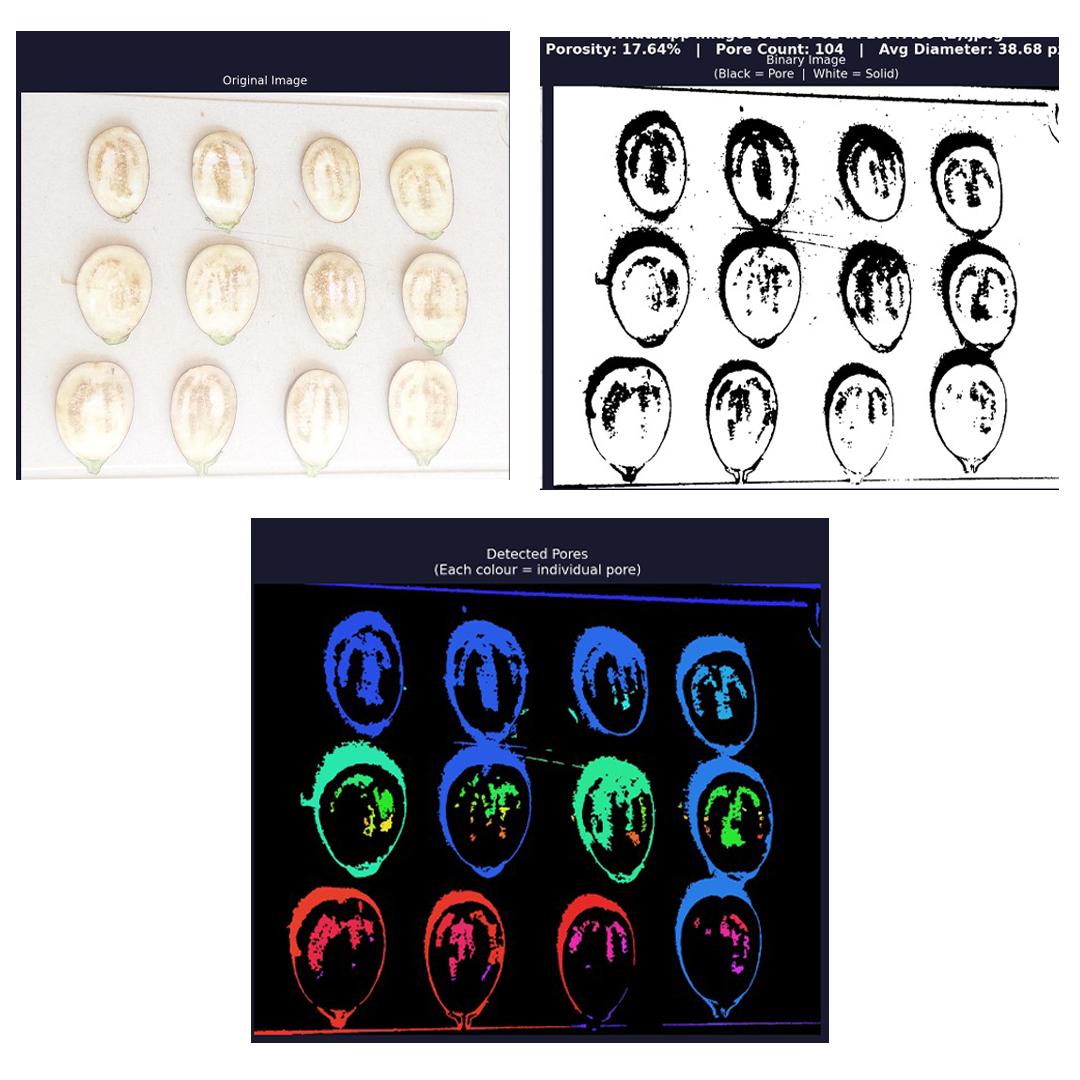
The investigation combined image analysis, computational modelling, and laboratory experimentation.
Mohammed Sahal developed a custom Python program to analyse nearly 4,500 microscopic pores within eggplant tissue. He used these measurements in ANSYS simulations to predict how oil would flow through the porous network, then tested the predictions in the laboratory using different oils and water.
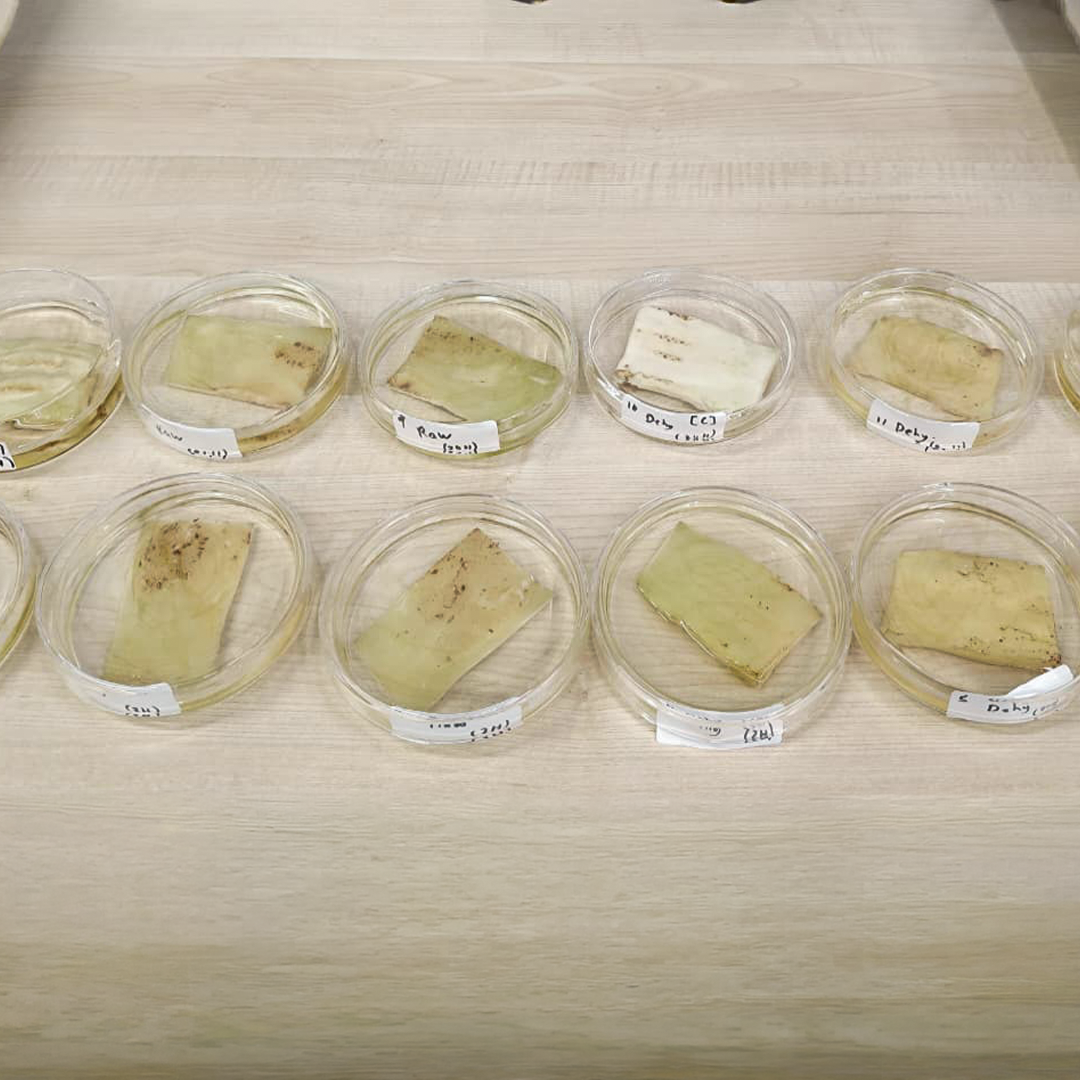
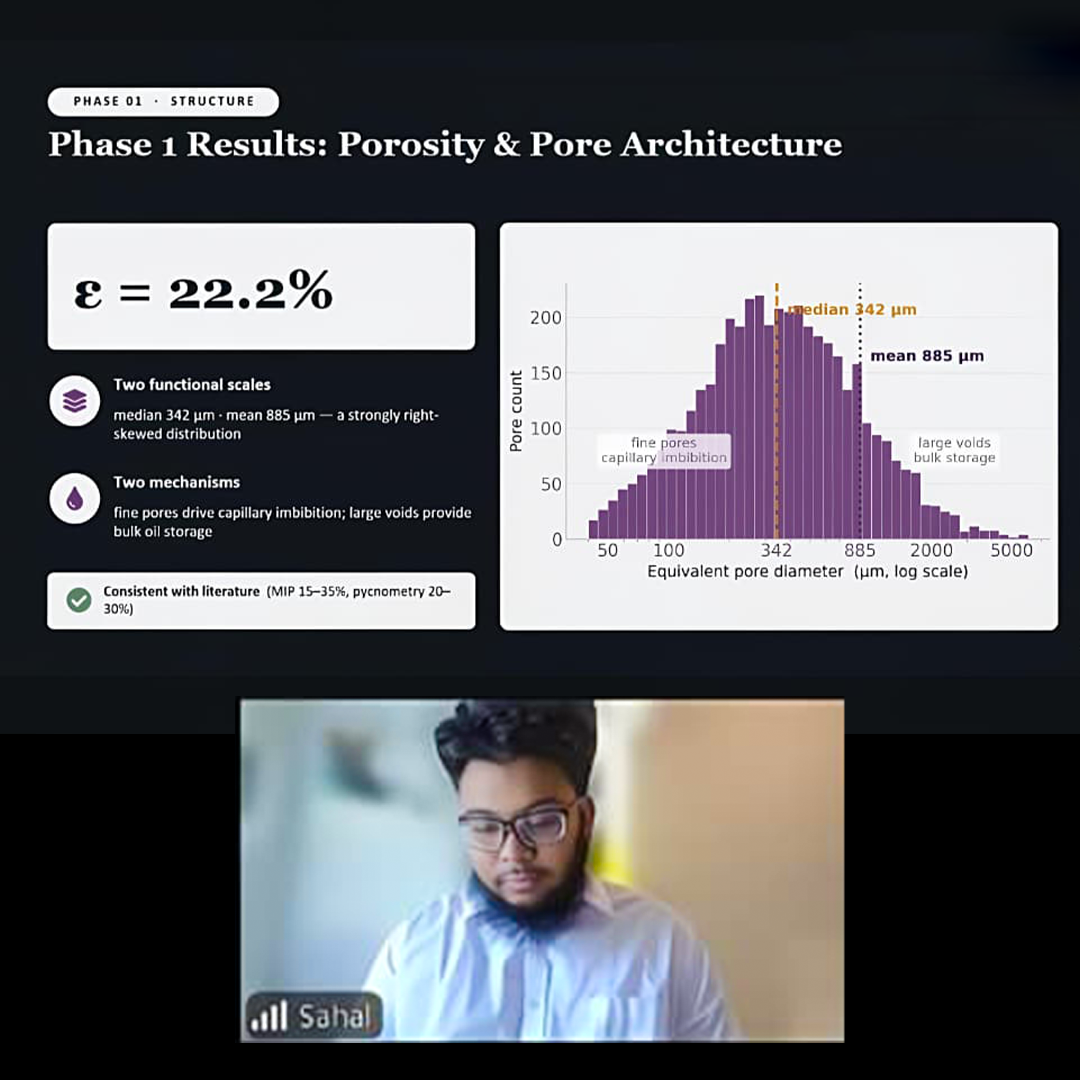
The results showed that dried eggplant absorbed considerably more oil than untreated samples. The study also found that the material’s pore structure could help predict its absorption capacity, offering useful insight into how researchers could develop and optimise plant-based sorbents.
Creating pathways for further study
The research established a rapid and cost-effective method for evaluating other plant-based materials through microscopic image analysis. Researchers could apply this approach to screen agricultural by-products before progressing to extensive laboratory testing.
Plant-based sorbents could reduce reliance on synthetic materials while giving agricultural waste a new purpose. Further investigation will need to assess their scalability, durability, and performance under real oil spill conditions.
Under the supervision of John Curtin Distinguished Professor Chithirai Pon Selvan, Mohammed Sahal gained experience in programming, microscopy, engineering simulation, experimental testing, and data analysis.
For aspiring mechanical engineering students, his work offers a glimpse into the range of disciplines and research opportunities the field can offer. It shows how curiosity, technical knowledge, and practical testing can turn a simple observation into a potential response to a global environmental challenge.